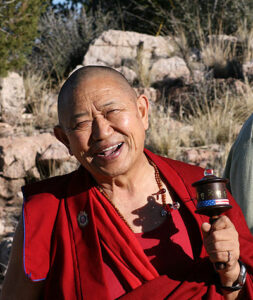
Loving Kindness On Challenged Times – H.E. Garchen Rinpoche
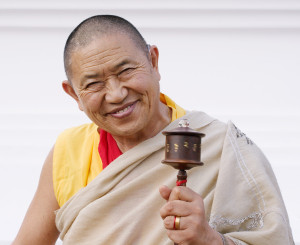
Teachings On Loving Kindness On Challenged Times
Garchen Rinpoche via ZOOM with Shang Shung Institute of Tibetan Medicine, 22 May 2020.
“I am very honored to be here with the sangha of Namkhai Norbu Rinpoche. I know him very well, also he knows me, he loves me, and I trust him. Namkhai Norbu Rinpoche is such a great master and such a great bodhisattva. He does a lot of great work for all sentient beings, for all humanity, so I take this great opportunity to be with Rinpoche’s sangha, as well as other listeners.
When we talk about conduct, there are two [aspects]: daily, or common, conduct and holy conduct. If someone does not know what the holy conduct means, soon they will have something like negative feelings, or problems will arise that they cannot stand and they won’t have good tolerance for. The reason for that is that this person has a strong attachment to their own body or their self and they do not understand the reality of life. Even you have very small problems, you feel very bad. And if you have some positive, good things, you can hardly enjoy. The reason for this is that you don’t really know the reality. For this kind of reason, it’s very important to under stand what the holy conduct or life style is. For that reason, in Buddhism we speak about refuge. Why do we want refuge? [We want refuge] from the suffering. Also, Buddha said that we need to acknowledge and understand that there is suffering. Once you acknowledge and understand the suffering, then you determine to search for the cause of sufferings. For that reason, first we talk about refuge.
It’s important to understand what is the cause of suffering. The cause of the suffering is self-centeredness and self-importance. Because of that we have a lot of suffering. Also, in Tibetan we have a proverb saying ‘All suffering comes through self- centeredness, or self-importance’. All suffering originates from self-importance so for that reason, once we know the cause, everybody wants to have happiness, peace and enjoyment, but they don’t find how to pursue that. Therefore, we don’t know what is the origin of the suffering. And origin of the suffering is self-centredness.
At the moment we have a suffering of this virus, a lot of people are dying, a lot of people are getting sick, a lot of people are suffering, because once we are born as sentient beings, we always have this full suffering of birth, of death, of sickness, and of aging. These sufferings continuously rotate one after the other. We normally ignore these sufferings, we think that we will always be healthy and happy, and as soon as this kind of suffering comes, we cannot handle it. Other than that, this kind of suffering is not something very new, we always have them.
When we see that such a big number of people are sick and dying at the moment, but if we look at it we will see that there is continuation of birth and death. This is what happens if we look at this worldwide dis ease at that moment. The reason also is that in ourselves we have a lot hatred, arrogance, jealousy, we have developed these negative effects a lot. Meanwhile, deluded, we are missing all good qualities, like kindness, love and compassion. For these reasons all negative energies developed and positive energies declined. Due to this imbalance in our nature it’s causing a lot of suffering.
Today, there are a great number of people affected by this disease and we are all suffering. At this moment you should not lose trust in yourself, and you should develop your own trust and inner strength. If you look at it, there are many countries and many people affected. There are some countries and people that are not affected. The reason is that it’s [different] people and different countries. It could be also collective karma, because we are a global community and we have developed a lot of hatred, jealousy and so forth. As a result of that some countries and some people we are suffering. On the other hand, some people and countries are not suffering, [be cause] maybe they have slightly different karma or, based on that karma, slightly different body and immune system. We need to understand this.
For the moment what we need to focus as individual countries, communities or individuals, to develop bodhicitta, loving kindness. Because we should understand why we have a lot of suffering. It’s because we are missing loving kindness and bodhicitta mind. And when someone is happy and enjoy, why they do they have that? [Be cause] they already developed loving kind ness and bodhicitta in their body and self. For that reason, we should understand that we need to develop bodhicitta.
When we are looking at the people who are sick, we can see the number one result are those who are not sick, the number two result are those who even though they are sick but they easily recover. Why does this happen? Because they have com passion, they have developed well compassion, loving kindness and especially they have taken refuge.
People who have refuge and who committed to keep their promise and practice well, they may not become sick, but people who got sick, maybe they have refuge but there was something wrong and they couldn’t keep it in the promised way, but then they reagreed, apologized and re stored having taken the refuge again and continue trying to keep their promise.
This kind of promise is to be kind, loving towards the humanity, or sentient beings. Maybe for that reason someone is sick but is able to get help though government, organizations or doctors and able to recover. But someone, even though the government and others support them, they may not able to recover. The reason that lies behind this may be their own karma. Some people die, and once you die, may be you also think ‘Why I am dying?’ and suffer. You also don’t need to be that way, because if you are losing this life, it may be also connected to your karma. Dying means you change your body, but your consciousness is still the same, it remains. For that reason, it’s important you try to accumulate bodhicitta.
Because we say there are four moments, or four conditions, when we need bodhicitta. The first time is when we are happy, then we need bodhicitta. Because it’s the result of [having] a kind bodhicitta mind in previous lives. When we have sufferings, in that case we also need to remember bodhicitta and try to cultivate it. We should understand why we are suffering particularly. Because I did negative actions in my past life or earlier in this life, so now I understand that the experience of suffering is not good. Now I try to understand this suffering and cultivate bodhicitta and try to be kind and nice with other sentient beings. This is another important [moment].
Another moment is when we are sick. When we are sick, also need bodhicitta. We need to understand why we are sick, what is the cause of this sickness. The cause of the sickness is that you must have done some certain negative actions. So, now you should sincerely apologize for that, you should think ‘I should think ‘I am sick now, that’s good, because I have an opportunity to purify my negative karma and meantime also I am sick on behalf of all sentient beings so that no one would need to go through what I suffer now .’ In this case it’s also important that you develop bodhicitta.
Once you die you also need to think ‘Ok, I change this life, I want to keep pursuing bodhicitta mind and loving kindness. Because I am changing my life like clothes, I’m losing this life, but my consciousness is always with me. Once I have this good, compassionate, loving, bodhicitta mind, when I get to the next life, then I will have a better life, better health, better life circumstances and conditions. For that rea son on behalf of all sentient beings in order to benefit all sentient beings, I want to pursue bodhicitta.’
So, you need to have bodhicitta when you have a happy time, and when we are unhappy, in the time of suffering, when we are sick, and even when we die. In all these conditions we need to develop bodhicitta.
Jang chub sem in Tibetan means bodhicitta mind. Jang means dispel or reject. What we need to reject is all our attachment, hatred, jealousy, anger and so forth. Because our life is samsara. Samsara presents [itself] as frozen wood, something that is bound and frozen. Loving kindness is like sunshine. When the sunshine of loving kindness [is directed] on this frozen attachment, hatred, all these samsaric things, it melts all that is frozen, and every thing inside of that is liberated. Jang chub sem is like this. It is important to understand.
For example, when you have suffering, if you look inside and think ‘Only I am suffering’ and focus only on yourself, you feel you suffer the most in this world, but if you look outside, at other people, other places in the world, how they suffer, how long they suffer, which way they suffer, when you observe other sentient beings’ sufferings, you will realize that your suffering cannot compare to the suffering of others because it’s not so big. You will understand that your suffering in comparison to others is not the same. It also helps to diminish your own suffering; you will realize that your suffering is not so bad. So, it’s also good in order to understand in which condition you are.
Once upon a time [there was] Jigten Sumgon, one of the Drikung Kagyu lineage masters. At his time there was a big dis ease around, and he prayed to [become] sick and stop this disease, not transferring [it] to other sentient beings. Through his kind and sincere compassion, the disease stopped. In the same way, when we are sick, we should think ‘Ok, I am sick. It’s good because I am able to purify my previous karma and at the same time, I want to be sick on behalf of all sentient beings, for that reason I am also gaining merit.’ This is also what jang chub means – to expel all the negative things and obtain all the good things.
It is bad that in entire world we have now this disease and suffering but on the other hand, when we look at it, it’s not bad. Because if we lived all the time happily, enjoying, not suffering, we would all forget what is suffering and what is cause and effect. So, when we think like this it is a good reminder for us about the importance of cause and effect. When we look at this, we can use that suffering in a positive way.
For example, if you are a wealthy person and live economically well, it’s a great moment to help other people, other sentient beings who [are in] need. So, this is also a great moment, because the entire world is locked down and many people need your help. So, it’s also a great moment, if you have material wealth, to be generous. On the other hand, since we are locked down and stay home, it’s a great moment to take vows, do practice, do pujas, so it’s also good, because normally we don’t have much time. Another thing, it’s a good opportunity to cultivate patience, tolerance. It is very important. Once we have suffering, we need to bring practice in our daily life, so this is good, when we suffer, we imagine ‘Ok, it’s good, now I am suffering, but it must be that I have done something [wrong] in my past lives. So now I want to take this opportunity to purify my past karma and I also want to it to function on behalf of all sick, suffering people.’
Based on that you can understand the importance of cause and effect and bodhicitta.
In this suffering time we have opportunity to practice patience, tolerance, keep our vows, be generous, and meditate. We can use all these things when we suffer at such times. You should not think that these are bad things, we can and should use them in a positive way.
So, what do we need to do at this moment? At that time, we are all busy like bees, but it’s a great opportunity and we should do meditation, same as Milarepa and all enlightened masters did. Even if we are not able to do the same as them, with out food, but we still should do meditation, samten in Tibetan. During meditation we should think and focus on compassion. Once we have infinite compassion or developed impartial compassion, through that we can arise impartial loving kindness. For that reason, first we need to meditate on infinitive or impartial loving, and through that we will arise impartial kindness and compassion. [it seems that Rinpoche refers to four Immeasurables: equanimity, love, compassion, joy. This is important, because once we developed well the com passion, through that we can purify all our negative karmas. Once we do gom, or samten, meditation, well, we will have less thoughts. Once we have less thoughts, or even we have thoughts, we are able to realize what are the thoughts, their origin, you will feel freed from all bondage. Then you will feel like you have no sickness, you will feel healthy.
All our diseases are connected to our thoughts. For example, if you think ‘I have some pain here and focus on that, you will have a physical pain too. If you don’t think this way, if you think there’s emptiness, there is nobody, etc, if you reach to see, obtain your natural state, at that time you won’t feel any sickness. So, this is also a great moment to do this kind of practice. When we have great suffering, this is a great moment to practice all six paramitas.
For example, in my own experience I spent about twenty years in prison. But when I think about it, it’s good, I am honored to have had this possibility. If I didn’t have [obtain] this kind of understanding, compassion and love inside of me and understanding that it is a good opportunity to purify my negative karma and develop kindness and compassion, for example, some people committed suicide in prison. If they don’t know how to use negative things in a positive way, many people take their own lives.
That’s why we should also understand that it’s a great moment.
Also, one great master Patrul Rinpoche said “Enjoyment is not good, suffering is good. “The reason is that when we have enjoyment, if we don’t have any suffering, then we create a lot of suffering within us, and all negative emotions arise. Once we have sufferings, that is also good, because the sufferings help us to purify all our negative karma and at the same time our understanding of suffering and compassion develop. In the thirty-seven practices of Bodhisattva it is mentioned very well.
So, what do we need to do? You should understand what you learn from your great teachers, masters, gurus and use teachings in your daily life. We need to face reality and it’s important to have loving kindness and compassion. It is important not to feel ‘I am unique suffering in this world.’ It’s a great opportunity to think ‘All sentient beings suffer and I wish to benefit all them.’ Or ‘I am sick I want to be sick on behalf of all of them.’ Such attitude is very important. It’s not a good moment to think ‘I am the unique one suffering.’
If we look at the teaching of the great master Shantideva, there are a lot of his teachings, it’s very important now to read, study and recite his teachings on loving kindness and compassion. What we need now is compassion. We have this pan demic disease now, this virus, because in ourselves we lack kindness, compassion and have a lot of hatred, attachment, ignorance, jealousy. We have a lot of what we don’t need and lack what we need. For that reason, a lot of infinite suffering arise from time to time. It happens because it is also related with our intention, because our actions do not come without any reason. It’s important to understand and we should try to avoid negative intentions. For that reason, as I said before, it’s good to recite Shantideva’s teaching, because Nalanda was such a great land and Shantideva was such a great master who gave such a great teaching, The Way of Bodhisattva. It’s important to read and chant it.
Sorry, I missed the first part. When we look what is bodhisattva. It means some one who has loving kindness within [them selves]. These days we have such great experts, doctors and scholars who work hard for sentient beings, trying to save their lives. All these people are bodhisattvas, there are no other bodhisattvas. This is nothing to do with religion Islam, Buddhism, Christianity. People who have bodhicitta, or compassion, in their body and mind, are bodhisattvas. So, bodhisattvas are not only Buddhists. Those doctors and people in the first line now are such great bodhisattvas too.
Another important thing that we need to remember is to pray to all the gurus who you trust, who you believe in, from whom you received most teachings. Your teacher, no matter who it is, is the root of all enlightened beings and the root of all the teachings, so you teacher’s body, mind and speech represent all Dharma phenomena, so we should pray to our guru and you should believe, you should think that your mind is integrating into your teacher’s heart, and you teacher’s body, mind and speech and your own body, mind and speech are inseparable, integrated. So, you need to think like this and pray for that. It’s one of the most important things. Through that you can develop compassion.
Then you need to pray for your lama, your guru. Buddha Shakyamuni said that even if he taught many teachings but there’s one single essence, true nature. Once you developed the true nature, what is untrue will decline. Once you developed loving kindness, or compassion, it leads you to become bodhisattvas. This is the reason why it’s very important to pray to your teacher.”