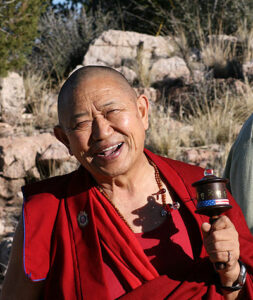
Dzogchen & Mahamudra Pith Instructions
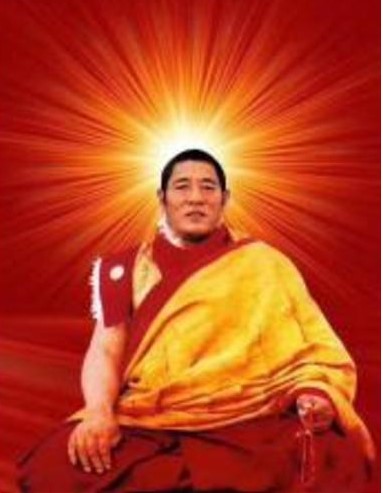
FLIGHT OF GARUDA
༈ འོད་གསལ་རྫོགས་པ་ཆེན་པོའི་ཁྲེགས་ཆོད་ལྟ་བའི་གླུ་དབྱངས་ས་ལམ་མ་ལུས་མྱུར་དུ་བགྲོད་པའི་རྩལ་
ལྡན་མཁའ་ལྡིང་གཤོག་རླབས་ཞེས་བྱ་བ་བཞུགས་སོ། །
ཞབས་དཀར་ཚོགས་དྲུག་རང་གྲོལ། །
འོད་གསལ་རྫོགས་པ་ཆེན་པོའི་ཁྲེགས་ཆོད་ལྟ་བའི་གླུ་དབྱངས་ས་ལམ་མ་ལུས་མྱུར་དུ་བགྲོད་པའི་རྩལ་ལྡན་
མཁའ་ལྡིང་གཤོག་རླབས་ཞེས་བྱ་བ་ཞུགས་སོ།།
Song of the View of the Thorough Cut of Luminosity Great Completion Called “Flight of the Garuda Capable of Quickly Traversing All the Levels and Paths” By Tshogdrug Rangdrol
༄༅། །ན་མོ་གུ་རུ་བྷྱཿ ཀུན་གསལ་མཁྱེན་བརྩེའི་རྟ་བདུན་དཀྱིལ་འཁོར་ལ། །ཚད་མེད་ཐུགས་རྗེའི་འོད་
ཟེར་རབ་སྤྲོས་ནས། །ཁམས་གསུམ་འགྲོ་བའི་མ་རིག་མུན་པ་ཀུན། །དུས་གཅིག་སེལ་མཛད་ཆོས་ཀྱི་རྒྱལ་
པོར་འདུད།
Namo guruvyah
Your seven-horsed disk of all-illuminating knowledge and love
Radiates the light rays of immeasurable compassionate activity
Dispelling at once all of the darkness of ignorance of the
migrators of the three realms—
I bow down to you Chokyi Gyalpo.
།སྟོང་གསལ་ཆོས་སྐུའི་ལྷ་ལམ་ཡངས་པའི་ངོས། །བྱམས་དང་བརྩེ་བའི་ཆུ་འཛིན་རབ་འཁྲིགས་ནས། །
སྐལ་བར་ལྡན་པའི་གདུལ་བྱའི་འཛིན་མ་ལ། །ཆོས་ཆར་འབེབས་མཁས་སྔགས་འཆང་རྡོ་རྗེར་འདུད། །
In the vast heavens of your empty-luminous dharmakaya,
Moisture-laden clouds of loving-kindness and love amass
And you expertly pour down a rain of dharma on the vessels
who
will hold it, the fortunate ones to be tamed—
I bow down to you Ngagchange Dorje.
ལྟ་བའི་གྲུ་དབུས་ལྷག་བསམ་དར་ཆེན་འཕྱར། །བརྩོན་འགྲུས་རླུང་གིས་བསྐྱོད་ནས་སྲིད་མཚོ་རུ།།
བྱིངས་པའི་འགྲོ་རྣམས་སྐུ་གསུམ་ནོར་བུའི་གླིང་། །འགོད་མཛད་དེད་དཔོན་འཇམ་དབྱངས་རྒྱ་མཚོ་འདུད།།
Amidst your ship of the view, the great sail of the special wish is
hoisted And, propelled by the wind of perseverance,
you set the migrators
Drowning in the ocean of becoming down on the jewel island of the three kayas—
I bow down to you captain Jamyang Gyatso.
དེ་གསུམ་མཁྱེན་བརྩེ་རྟ་བདུན་དཀྱིལ་འཁོར་ལས། །འཕྲོས་པའི་བྱིན་རླབས་ནུས་མཐུའི་ཚ་བའི་ཟེར། །
སྐལ་ལྡན་བྱ་བཏང་པད་དཀར་བདག་ལ་ཕོག །རིག་པའི་ཁ་ཕྱེ་ཉམས་རྟོགས་འདབ་སྟོང་བཞད། །
The warm rays of potent blessings radiated from
These three seven horsed disks of knowledge and love,
Strike myself, the white lotus of a fortunate one who has
abandoned activities,
Making my bud of rigpa blossom into a thousand petals of
experience and realization.
བདག་བློའི་གེ་སར་ལྟོ་བར་ལེགས་འཁྱིལ་བའི། །ལྟ་བའི་གླུ་དབྱངས་མྱོང་གྲོལ་བདུད་རྩིའི་བཅུད། །
སྐལ་ལྡན་སློབ་མ་རྐང་དྲུག་ཚོགས་ལ་འབུལ། །ངོམས་པ་མེད་པར་གུས་པའི་ཡིད་ཀྱིས་རོལ།
The melodious song of the view, a nectar which liberates on
tasting, Having descended nicely into the centre of the fresh
flower of my intellect,
Is offered to the swarm of bees, my fortunate students;
Please, respectfully drink to your heart’s content!
༈ ཨེ་མ་ཧོ། བྱ་བཏང་གུ་ཡངས་ཡན་པ་བློ་བདེ་ངས། །ས་ལམ་མ་ལུས་མྱུར་དུ་བགྲོད་བྱེད་པའི། །
ལྟ་བའི་གླུ་དབྱངས་མཁའ་ལྡིང་གཤོག་རླབས་ལེན། །སྐལ་ལྡན་སེམས་ཀྱི་བུ་རྣམས་ལྷན་ནེར་ཉོན། །
I, abandoned of activities, spacious and carefree, happy of
mind, Sing Flight of the Garuda, a melodious song of the view
Which will quickly take you through all the levels and paths
without exception;
Fortunate mind sons, listen attentively!
འཁོར་འདས་གཉིས་ལ་འབྲུག་གི་སྒྲ་བཞིན་དུ། །ཡོངས་གྲགས་སངས་རྒྱས་ཟེར་བའི་སྒྲ་བོ་ཆེ། །
འགྲོ་དྲུག་སེམས་ཅན་རྒྱུད་ལ་རྟག་བཞུགས་ནས། །སྐད་ཅིག་ཙམ་ཡང་གཡེལ་མེད་འགྲོགས་འདི་མཚར།
The loud sound of “buddha” is, like the roar of thunder,
Heard everywhere throughout both samsara and nirvana.
That buddha is perpetually present in the mindstreams of the
six migrator sentient beings,
An alliance which never fails even for an instant—how amazing!
སངས་རྒྱས་རང་ལ་ཡོད་པར་མ་ཤེས་པར། །ཕྱི་རོལ་གཞན་དུ་སངས་རྒྱས་བཙལ་བ་མཚར། །
གསལ་དྭངས་ཉི་མའི་སྙིང་པོ་ཇི་བཞིན་དུ། །མངོན་སུམ་གསལ་ཡང་མཐོང་མཁན་ཉུང་བ་མཚར། །
Not knowing that buddha exists in themselves,
They seek it elsewhere outside themselves—how amazing!
It is directly visible, being like the pure brilliance
Which is the essence of the sun, yet few see it —-how amazing!
ཕ་མ་མེད་པའི་རང་སེམས་སངས་རྒྱས་ཉིད། །སྐྱེ་མ་མྱོང་ཞིང་འཆི་རྒྱུ་མེད་པ་མཚར། །
བདེ་སྡུག་སྣ་ཚོགས་ཇི་ལྟར་མྱོང་ན་ཡང་། །བཟང་དང་ངན་དུ་ཅུང་ཟད་མི་འགྲོ་མཚར། །
Ones’ own mind, buddha itself, having no parents
Never knows birth so has no cause of death — how amazing!
No matter what it experiences of the diverse joys and
sufferings,
It is not bettered or worsened in the slightest—-how amazing!
མ་སྐྱེས་གདོད་ནས་དག་པའི་སེམས་ཉིད་འདི། །མ་བཅོས་ཡེ་ནས་ལྷུན་གྱིས་གྲུབ་པ་མཚར། །
རང་བཞིན་ཡེ་ནས་གྲོལ་བའི་རང་རིག་ཉིད། །གང་བྱུང་གང་བདེར་བཞག་པས་གྲོལ་བ་མཚར།། །།
This unborn primally-pure mindness Uncontrived, primordially
comes spontaneously into existence—how amazing!
This primordially-liberated self-knowing, its nature,
Is liberated by leaving what arises to be as it pleases—
how amazing!
༈ ཨེ་མ་ཧོ། སྐལ་ལྡན་རིགས་ཀྱི་བུ་རྣམས་མ་ཡེངས་ཉོན། །དུས་གསུམ་རྒྱལ་བ་མ་ལུས་ཐམས་ཅད་ཀྱིས། །
ཆོས་ཕུང་བརྒྱད་ཁྲི་བཞི་སྟོང་ལ་སོགས་པའི། །གསུང་རབ་ནམ་མཁའི་མཐའ་མཉམ་དཔག་མེད་ཀྱང་། །
དོན་ལ་རང་སེམས་རྟོགས་ཕྱིར་གསུངས་པ་ལས། །གཞན་དུ་ཅི་ཡང་རྒྱལ་བས་གསུངས་པ་མེད། །
EMAHO
Fortunate sons of the family listen undistractedly!
All of the conqueror of the three times without exception
Give teachings—the eighty-four thousandfold dharma heap,
and so on.
These, equal to the limits of space, are unfathomable in extent
Yet are for the one purpose of realizing your own mind.
The conquerors do not give teaching for any
purpose other than that.
དཔེར་ན་སྡོང་པོའི་རྩ་བ་གཅིག་བཅད་ན། །ཡལ་ག་ལོ་མ་ཁྲི་འབུམ་དུས་གཅིག་བསྐམ། །
དེ་བཞིན་སེམས་ཀྱི་རྩ་བ་གཅིག་བཅད་ན། །གཟུང་འཛིན་ལ་སོགས་འཁོར་བའི་ལོ་འདབས་བསྐམ། །
As an example, if the one root of a tree trunk us cut,
A thousand million branches and leaves wither at once,
And likewise, if the one root of mind is cut,
Samsara’s leaves and petals—grasped-grasping, and so on —
all wither.
ཁང་སྟོང་མུན་པ་ལོ་སྟོང་ལོན་པ་ཡང་། །སྒྲོན་མེས་སྐད་ཅིག་ཉིད་ལ་སེལ་བ་བཞིན། །
རང་སེམས་འོད་གསལ་རྟོགས་པའི་སྐད་ཅིག་ལ། །བསྐལ་པ་གྲངས་མེད་བསགས་པའི་སྡིག་སྒྲིབ་འདག །
An empty house might be in darkness for a thousand years
But a lamp dispels it in an instant and likewise
In the instant of realizing your own mind, luminosity,
The evil deeds and obscurations accumulated over countless
aeons are purified.
གསལ་དྭངས་ཉི་མའི་སྙིང་པོའི་རང་བཞིན་དེ། །བསྐལ་པ་སྟོང་གི་མུན་པས་སྒྲིབ་མི་ནུས། །
དེ་བཞིན་རང་སེམས་སྙིང་པོའི་འོད་གསལ་དེ། །བསྐལ་པར་འཁྲུལ་པས་སྒྲིབ་པར་མི་ནུས་སོ། །
The pure brilliance which is the nature of the sun’s essence
Cannot be obscured by the darkness of a thousand aeons
And, likewise, the luminosity which is the essence of your own
mind Cannot be obscured by the confusion of aeons.
ནམ་མཁའི་རང་བཞིན་མདོག་དབྱིབས་ཚད་ལས་འདས། །དཀར་ནག་སྤྲིན་གྱིས་གོས་པར་མི་འགྱུར་ལྟར། །
སེམས་ཀྱི་རང་བཞིན་མདོག་དབྱིབས་ཚད་ལས་འདས། །དགེ་སྡིག་དཀར་ནག་ཆོས་ཀྱིས་གོས་མི་འགྱུར། །
Like the sky’s nature beyond measure of colour and shape
Does not become tainted by black and white clouds,
Mind’s nature beyond measure of colour and shape Does not
become tainted by the black and white of evil and virtue.
དཔེར་ན་འོ་མ་མར་གྱི་རྒྱུ་ཡིན་ཀྱང་། །མ་བསྲུབས་བར་དུ་མར་ནི་མི་འབྱུང་ལྟར། །
འགྲོ་ཀུན་བདེར་གཤེགས་སྙིང་པོའི་རྒྱུ་ཡིན་ཀྱང་། །ཉམས་སུ་མ་བླངས་སེམས་ཅན་སངས་མི་རྒྱས། །
For example, like milk is the cause of butter but,
Until it has been churned, the butter does not arise,
All migrators are the cause, sugatagarbha, but,
If they do not practise it, sentient beings do not become
buddhas.
འདི་ཉིད་ཉམས་སུ་བླངས་ན་ཀུན་གྲོལ་ཏེ། །དབང་པོ་རྣམས་ལ་རྣོ་རྟུལ་ཁྱད་པར་མེད། །
ཉམས་སུ་བླངས་ན་བ་གླང་རྫི་ཡང་གྲོལ། །མངོན་སུམ་རང་སེམས་འོད་གསལ་དོན་རྟོགས་ན། །
ཁ་བཤད་མཁས་པ་འདི་ལ་མི་དགོས་ཏེ། །བུ་རམ་རང་གི་ཁ་རུ་ཟོས་པའི་ཚེ། །
བུ་རམ་རོ་བཤད་མི་དགོས་ཇི་བཞིན་ནོ། །
If they do practice it, all of them will be liberated
Regardless of the sharpness or dullness of their faculties—
If it is practised, even a cowherd will be liberated.
If the fact of your own mind, luminosity, is realized in direct
perception,
There is no need for someone expert in its verbal explanation,
Just as, when you put sugar in your own mouth,
There is no need for an explanation of the taste of sugar.
འདི་ཉིད་མ་རྟོགས་པཎྜི་ཏ་ཡང་འཁྲུལ། །ཐེག་དགུའི་བཤད་པ་ཡོངས་ལ་མཁས་གྱུར་ཀྱང་། །
མ་མཐོང་རྒྱང་གི་གཏམ་རྒྱུད་བཤད་པ་བཞིན། །སངས་རྒྱས་ས་ལ་གནམ་ས་བས་ཀྱང་རིང་། །
When just this is not realized, even master scholars remain
confused; They might be totally expert at explaining the nine
vehicles. But their explanations will be like tales of unseen,
far away places. And Buddhahood will be even further away for
them than the sky is from the earth.
ཡང་དག་རང་སེམས་འོད་གསལ་མ་རྟོགས་ན། །བསྐལ་པའི་བར་དུ་ཚུལ་ཁྲིམས་བསྲུངས་པ་དང་། །
ཡུན་རིང་བར་དུ་བཟོད་པ་བསྒོམས་བྱས་ཀྱང་། །ཁམས་གསུམ་འཁོར་བའི་གནས་ནས་མི་འཕགས་པས། །
དེའི་ཕྱིར་འབད་པས་སེམས་ཀྱི་རྩད་གཅོད་གྱིས།། །།
If the authentic, your own mind, luminosity, is not realized,
You might keep the disciplines for as long as an aeon and
Might practise patience for a very long time but
Will not lift yourself out of the abodes of three-realmed
samsara.
Therefore, you must work hard to cut mind at the root and
eliminate it completely!
༈ ཨེ་མ་ཧོ། ད་ཡང་སྐལ་ལྡན་བུ་མཆོག་ཀུན་གྱིས་ཉོན། །རང་གི་སེམས་ཀྱི་རྩ་བརྡར་མ་ཆོད་ན། །
དགེ་སྦྱོར་གང་བྱས་གནད་དུ་མི་འགྲོ་སྟེ། །དཔེར་ན་འབེན་ནི་དྲུང་དུ་བཞག་ནས་ཀྱང་། །
མདའ་ནི་ཐག་རིང་ཕྱོགས་སུ་འཕེན་དང་མཚུངས། །
EMAHO
Now, listen once more, all you excellent fortunate sons!
If the root of your own mind is not resolved,
Any spiritual practice you do will not get to the key point.
To give examples: it would be like putting a target before you,
Yet firing the arrow in a direction far from it;
རྐུན་མ་རང་གི་ཁྱིམ་དུ་བཞག་ནས་ཀྱང་། །རྩད་གཅོད་དྲག་པོ་ཕྱི་རུ་བྱེད་དང་མཚུངས། །
འདྲེ་ནི་ཤར་སྒོའི་ཕྱོགས་སུ་བཞག་ནས་ཀྱང་། །གླུད་ནི་ནུབ་ཀྱི་ཕྱོགས་སུ་གཏོང་དང་མཚུངས། །
It would be like leaving a thief behind in your house,
While making a strong effort to get rid of him outside;
It would be like leaving a harmful spirit at the eastern door,
While putting the payment to get rid of him to the west;
དབུལ་པོའི་སྒྱེད་རྡོ་གསེར་དུ་མ་ཤེས་པར། །གཞན་ནས་སློང་མོ་བྱེད་པ་ཇི་བཞིན་ནོ། །
དེས་ན་རང་གི་སེམས་ཀྱི་རྩད་བརྡར་རྣམས། །འདི་བཞིན་ཆོད་ཅིག་སྐལ་ལྡན་སྙིང་གི་བུ། །
It would be like a poor man who, not knowing that his
Hearth stones are gold goes begging for alms from others.
Thus, whose who are going to resolve the root of mind
Must go about it like this, fortunate heart sons!
སེམས་ཞེས་བྱ་བའི་རིག་རིག་འགྱུ་འགྱུ་བོ། །བདས་ན་མི་ཟིན་ཡལ་ཡལ་བན་བུན་པོ། །
བཞག་ན་མི་སྡོད་ཚུབ་ཚུབ་ཡེར་ཡེར་པོ། །འདི་ཞེས་མཚོན་མེད་སྟོང་པ་ཕྱང་ཆད་པོ། །
The flickering knowing and moving called “mind”
If pursued cannot be captured—it vanishes and vanishes elusive
as mist—And if set in place does not stay put – restless, it
flitters about all over the place. There’s no showing
it as “this” for it is definitely empty.
བདེ་སྡུག་སྣ་ཚོགས་མྱོང་མཁན་རང་གི་སེམས། །དང་པོ་འདི་ནི་བྱུང་ས་གང་ནས་བྱུང་། །
ཕྱི་ཡི་སྣང་བ་རི་བྲག་ཆུ་ཤིང་དང་། །ནམ་མཁའི་རླུང་སོགས་བརྟེན་བཅས་རྟེན་མེད་པ། །
གང་ལས་བྱུང་ངམ་འདྲི་ཞིང་རྩད་བརྡར་ཆོད། །
This agent who experiences the diversity of happiness and
suffering, your mind—
Where initially does it come from, what is it source?
Ask yourself and try to resolved, “Does it have a basis in outer
appearances such as
Rocky mountains, rivers, trees, the wind of the sky, and so on
Or is it without such basis — from where does it come?”
ཡང་ན་ཕ་མ་གཉིས་ཀྱི་ཁུ་ཁྲག་ལས། །བྱུང་ངམ་སྙམ་ན་ཇི་ལྟར་བྱུང་ཚུལ་དཔྱོད།
དེ་ལྟར་དཔྱད་པས་བྱུང་ས་མ་རྙེད་ཚེ། །བར་དུ་ད་ལྟ་རང་ལུས་སྟོད་སྨད་དང་། །
Alternatively, you might think, “Did it come from
The semen and blood of the two parents?” in which case you
should analyse just how that would occur.
When analyzing like that yields no source for it,
Next ask where in the interim of the present moment does it
dwell?
དབང་པོ་དོན་སྙིང་ལ་སོགས་གང་ལ་གནས། །སྙིང་ལ་གནས་ན་མགོ་མཇུག་གང་ན་གནས། །
དབྱིབས་དང་ཁ་དོག་ལ་སོགས་ཇི་ལྟར་འདུག །ལེགས་པར་དཔྱོད་ལ་གནས་ས་མ་རྙེད་ཚེ། །
Is it dwelling in the upper or lower part of the body,
In your sense faculties, internal organs, heart, and so on?
If it is dwelling in the heart, then, top to bottom, where exactly
is it dwelling?
What sort of shape, colour, and so on does it have?
When having analysed well, you find no dwelling place for it,
ཐ་མར་འགྲོ་དུས་ཡུལ་གྱི་དབང་པོའི་སྒོ། །གང་ནས་འགྲོ་དང་ཕྱི་རོལ་ཡུལ་རྣམས་སུ། །
ཡུད་ཙམ་ཉིད་ལ་སླེབས་པའི་དུས་དེ་རུ། །ལུས་ཀྱིས་ཕྱིན་ནམ་སེམས་ཉིད་ཁོ་ནས་ཕྱིན། །
ལུས་སེམས་ཚོགས་པས་ཕྱིན་སོགས་རྩད་བརྡར་ཆོད།
Try to resolve at the end when it goes, through which door
Of the object faculties it goes, and, for the mere instant that
It takes to arrive at the external objects, during that time,
Whether it went via the body or via only the mind itself,
Or via body and mind as a combination? Resolve it in these and
other ways.
དེ་ཡང་ཉོན་མོངས་རྣམ་རྟོག་སྐྱེ་བའི་ཚེ། །དང་པོ་གང་ནས་སྐྱེས་དང་ད་ལྟའི་དུས། །
གང་ལ་གནས་དང་མདོག་དབྱིབས་ཨེ་འདུག་ལྟོས། །ཐ་མར་རང་
སར་ཞི་ནས་ཡལ་བའི་ཚེ། །གང་དུ་ཡལ་ནས་འགྲོ་སོགས་རྩད་བརྡར་ཆོད། །
when affliction or discursive thought arises,
Look to see, “First, from where did it arise?”, then for the
present time “Where does it dwell” and “What colour and
shape does it have?” At the end, when subsiding in
its own place it vanishes,
Ask, “where did it vanish and go?” Try to resolve it in those and
other ways.
འཆི་བའི་ཚེ་ན་ཇི་ལྟར་བྱས་ནས་འགྲོ། །ཞིབ་ཏུ་དཔྱོད་ལ་སྐྱེ་འཆི་འགྲོ་འོང་དང་། །
ངོས་བཟུང་བྲལ་བའི་སྟོང་སངས་བརྗོད་མེད་དུ། །ངེས་པར་གཏན་ལ་མ་ཕེབས་བར་དུ་དཔྱོད། །
At the time of death, carefully research to find out what exactly
happens when it departs?
And continue to analyse for as long as you have not arrived at a
certain determination Of an inexpressible, cleared-out,
empty state free of Birth and death, coming and going, and the
identification of things.
གཞན་གྱིས་དཔེ་དང་ཁ་བཤད་སྐམ་པོ་ཡིས། །སྟོང་པ་ཉིད་ཡིན་ཟེར་བས་མི་ཕན་ཏེ། །
དཔེར་ན་སྟག་ཡོད་ཟེར་བའི་ས་ཆ་རུ། །གཞན་གྱིས་སྟག་ནི་མེད་པར་བརྗོད་ན་ཡང་། །
རང་ཉིད་དེ་ལ་ཡིད་ཆེས་མི་སྐྱེ་བར། །ཡིད་གཉིས་ཐེ་ཚོམ་ཟ་བ་ཇི་བཞིན་ནོ། །
The dry examples and verbal explanations of others
Tell you “It is emptiness”, but this does not help.
For example, in a place where there are said to be tigers,
Others can tell you that there are no tigers but
That will not be enough to make you believe it,
Leaving you consumed with doubt – it’s like that.
རང་གི་སེམས་ཀྱི་རྩ་བ་རང་ཉིད་ཀྱིས། །ཞིབ་ཏུ་དཔྱད་ནས་གཏན་ལ་ཕབ་པའི་ཚེ། །
དཔེར་ན་སྟག་ཡོད་ཟེར་བའི་ལུང་པ་དེར། །རང་ཉིད་སོང་ནས་ཕུ་མདོ་ཐམས་ཅད་དུ། །
སྟག་ནི་ཨེ་ཡོད་བརྩད་བརྡར་བཅད་གྱུར་ནས། །མ་རྙེད་ཚེ་ན་རང་ཉིད་ཡིད་ཆེས་ཏེ། །
ཕྱིན་ཆད་ས་དེར་སྟག་ཡོད་སྙམ་པ་ཡི། །ཡིད་གཉིས་ཐེ་ཚོམ་མེད་པ་ཇི་བཞིན་ནོ།། །།
When you yourself have determined
The root of your mind through careful research,
It is, for example, like going yourself to that area
Where there are said to be tigers and looking everywhere,
High and low, asking “Are there tigers here?” When, having
resolved the matter like that,
You find no tigers, you trust in that yourself and
Henceforth have none of the doubt that thinks
“Are there tigers there?” — it’s like that.
༈ ཨེ་མ་ཧོ། ད་ཡང་སྐལ་ལྡན་བུ་རྣམས་ཚུར་ཉོན་དང་། །ཁྱེད་རྣམས་དེ་ལྟར་བརྟགས་ཤིང་དཔྱད་པའི་ཚེ། །
སེམས་ཞེས་མཛུབ་མོ་བཙུགས་ནས་འདི་ཡིན་ཞེས། །དངོས་པོར་གྲུབ་པ་རྡུལ་ཙམ་མ་རྙེད་ཚེ། །
མ་རྙེད་པ་དེ་རྙེད་པའི་མཆོག་ཡིན་ནོ། །
EMAHO
Now, listen here once more you fortunate sons!
When you examine and analyse mind as described above,
At the point when you have failed to find so much as a speck of
substantially existing “mind”
That you could point to and say, “This is it”,
That not finding is the supreme finding.
འོ་སྐོལ་སེམས་ལ་དང་པོ་བྱུང་ས་མེད། །ཡེ་ནས་སྟོང་པས་ངོ་བོ་ངོས་གཟུང་མེད། །
བར་དུ་གནས་ས་དབྱིབས་དང་ཁ་དོག་མེད། །ཐ་མར་འགྲོར་མེད་འདིར་སོང་རྗེས་མེད་དེ། །
འགྱུ་བ་སྟོང་འགྱུ་སྟོང་པ་སྟོང་སྣང་ཡིན། །
Initially, our minds have no source, no place of arising,
Because, being primordially empty, they have no entity that
could be identified
In the interim, they have no dwelling place,
no shape and colour.
In the end, there is no place to which they go nor a trace left
that shows where they went—-
Their movement is empty movement, their being empty is
empty appearance.
སེམས་ཉིད་འདི་ནི་དང་པོ་རྒྱུས་མ་བསྐྱེད། །ཐ་མ་ཕྱི་རོལ་རྐྱེན་གྱིས་འདི་མི་འཇིག །
འཕེལ་དང་འགྲིབ་དང་གང་སྟོང་འདི་ལ་མེད། །འཁོར་འདས་ཡོངས་ལ་ཁྱབ་པས་ཕྱོགས་རིས་མེད། །
This mindness initially was not created by causes
And at the end will not be destroyed by external circumstances.
It has no rise and fall, no being filled and emptied.
Wholly pervading samsara and nirvana, it has no partiality.
འདི་ཞེས་མི་མཚོན་ཅིར་ཡང་འགག་མེད་འཆར། །ཅིར་ཡང་མ་གྲུབ་ཡོད་མེད་མཐའ་ལས་འདས། །
འགྲོ་འོང་མེད་ཅིང་སྐྱེ་འཆི་གསལ་འགྲིབ་མེད། །སེམས་ཀྱི་རང་བཞིན་དྲི་མེད་ཤེལ་གོང་བཞིན། །
Not demonstrable as “This”, it shines forth without stoppage
as everything whatever;
Not existing as anything whatever, it is beyond the extremes of
existence and non-existence.
It is without going and coming, without birth and death, and
without clearing and obscuration.
Mind’s nature is like a stainless crystal ball —
ངོ་བོ་སྟོང་པ་རང་བཞིན་གསལ་བ་དང་། །ཐུགས་རྗེ་འགག་པ་མེད་པར་ས་ལེར་གནས། །
འཁོར་བའི་སྐྱོན་གྱིས་ཅི་ཡང་མ་གོས་ཏེ། །སེམས་ཉིད་ཡེ་ནས་སངས་རྒྱས་ཡིན་པར་ངེས། །
It sits clearly present as entity empty, nature luminous,
And compassionate activity stoppageless.
It is not tainted at all by the faults of samsara;
Mindness is ascertained to be the primordial buddha.
འདི་ནི་གཞི་ཡི་སེམས་ཉིད་གནས་ལུགས་ཀྱི། །རང་བཞིན་གཏན་ལ་ཕབ་པའི་ངོ་སྤྲོད་དོ།། །།
This has been the introduction which determined
The nature of the actuality of the ground’s mindness.
a
 After you have firmly decided that
everything is emptiness. If you develop a
conduct in which you abandon virtue and do not avoid evil deeds,
That will be the view of the mara of bad action run wild.
Keep yourself from falling under the control
of the view of that sort of mara!
These are the introductions of Great Completion.
These introductions are extremely important:
While you have not realized that every one of
All the external fictional visible and audible phenomena are emptiness,
you might think you are meditating in the view
but what meditation is it?
Therefore, first you should proceed like this:
Sometimes look while supplicating the guru and
sometimes look carefully while relaxing and tightening.
When you look in that way, your mind will be glad and
Everything will be shining forth while obviously empty.
Will definitely be the birth of a deep certainty in which you
think “I can touch the objects of external appearances
with my hand but there is nothing to apprehend there”
and “This is definitely the view.”
This is the time of discovering certainty of the view.
Do not spoil it with grasping; relax into a state without grasping.
Even if you do not practice after having received the introduction,
At the time of death no matter which fears arise in the bardo,
You will know that everything is own appearance, the own forms
of emptiness, and you will become buddha in the alpha purity ground.
To practice without having received the introduction, will be like the example of
someone who is mistaken on the first day of the month.
Being still being mistaken on the fifteenth day of the month.
When you have not realized that all fictional phenomena are
truthless. What a huge lie it is to say, “I have realized emptiness.”
Thus, this sort of introduction must first be received
while sitting in front of the guru
So that it is determined based on what is real—
then you won’t go down a mistaken path.
Therefore, fortunate sons keep this advice in your hearts!
EMAHO
Now, once more fortunate sons of the family, listen!
When you have taken in that actuality of the view,
Sever all ties of attachment and aversion to people and homeland.
Alone in forest tracks and mountain valleys,
Give up endeavours of the body and let it be natural;
Cut talk and other expressions of speech, and stay silent;
Allow mind to be like space, beyond the realm of thinking.
Relax in that state without addition or subtraction.
If there is no focus in mind, that is the view.
Stay in the state in which there is no meditation to be done!
Attain the fruition of attainment-less Great Completion!
Moreover, when you set yourself in equipoise on the view,
do not catch yourself in nets of thought such
as “this is how to rest in the state of rigpa!”
or “I am falling under the control of sinking and agitation!”
Instead, set yourself relaxed in the state absent of the things of
referenced focus, a state clear and open, free of restrictions,
a state of transparency, free to be as it pleases.
You cannot see the fact beyond rational mind using the stuff of rational mind and
You cannot reach the activity-less place with the stuff of activity,
So, if you want to attain the beyond rational mind, activity-less fact,
Instead of engaging in the spoilage of contrivance, set yourself in naked rigpa.
That is the supreme, free of all grasped-grasping view.
That is the supreme, absent of abandonment-adoption meditation.
That is the supreme, beyond conceived-endeavour conduct.
That is the supreme, hope-free self-abiding fruition.
It is not seen by looking at a view, so put aside all searching for the view!
It is not discovered by meditation, so cast away the referenced
foci of thinking with grasping.
It is not accomplished by conduct, so let go of grasping at illusions.
It is not gained by seeking it, so leave aside hopes of a fruition.
The awareness of the present is un-manufactured and hanging loose, so
do not engage in biases, do not spoil it with grasping!
This rigpa of non-thing which is luminous—
Just this is the pinnacle of all views,
This freedom from rational mind smeared all over with referenced foci—
Just this is the pinnacle of all meditation.
This placement in uncontrived grasping-less looseness—
Just this is the pinnacle of all conduct.
This unsought primordially spontaneously-existing situation–
Just this is the pinnacle of all fruition.
Look at the heart of the view, empty luminosity without grasping!
Preserve the heart of meditation, self-liberation without grasping!
Set yourself in the heart of conduct, the sixfold group left loose!
The heart of the fruition is the collapse of hope and fear.
If you are free of bounding extremes, that is the supreme king of views.
If you are free of vacilatory foci, that is the supreme king of meditation.
If you are free of accepting and rejecting, that is the supreme king of conduct.
If you are free of hope and fear, that is the supreme king of fruition.
Since there is nothing to view, cast off referenced foci of the view.
Since there is nothing to meditate on, let whatever arises do as it pleases.
Since there is no conduct to be done, release suppression and
furtherance, abandonment and adoption.
Since there is nothing to be attained, leave aside hopes for a fruition.
By letting what it is be, do not engage in grasping on its account.
By being without “This is it”, do not engage in suppression and furtherance.
By being without vacilatory foci, do not engage in biases.
In primal purity’s self-knowing self-illumination,
because it is beyond rational mind’s objects of thought, there is nothing to view;
because its entity is free of a ground, there is nothing to meditate on;
because it is self-liberation beyond extremes, there is no conduct to be done;
because it is beyond the clinging that goes with conceived
endeavours’ accomplishment, there is no fruition.
Because the entity is emptiness, there is no abandonment and no attainment.
Because the nature is luminosity-emptiness, conceived
endeavours’ accomplishment has collapsed.
Because everything is stoppageless, there are no biases.
No matter which way it shines forth, do not grasp at it being so!
A yogin’s awareness is comparable to a bird’s path in the sky.
As with a bird’s trace which is not visible because of having ceased to begin with,
thinking and thought cannot be seen because of having ceased to begin with,
so do not attempt to continue them by grasping at following after them!
As with a bird’s trace which is nothing because of not happening afterwards,
do not go out to greet thinking and thought afterwards!
As with a bird’s trace which in the present has no colour and shape,
the thinking and thought of the present in the end goes its own way.
So do not create the spoilage of contrivance by using an antidote directed at “it”.
No matter how it shines forth, do not grasp at it being like that!
This is the ultimate heart instruction for bringing it to the path:
No matter which way it shines forth, if you do not grasp at it being like that,
Affliction, vanishing of itself, is great wisdom.
It is a birthless beyond-thought primordially-liberated view,
so if you work hard at it, there will be no view of it.
It is a relaxation-into-being-left-to-be-itself naturally-occurring meditation,
so if you work hard at it, there will be no meditation on it.
It is a non-duality of abandonment-adoption illusory conduct,
So if you work hard at it, there will be no conduct of it.
It is a non-duality-of-hope-and-fear nature of fruition,
So if you work hard at it, there will be no fruition.
This mindness, being free of root of the three times, unmeditated, directly
appears-what a happy event! Phenomena from
beginning to end are by nature pure. Primordially liberated, wholly liberated, with
all conceived effort-endeavours collapsed—how wondrous!
This common awareness left un-manufactured and hanging loose
is the conqueror’s mind, extreme-free, a wide-open interior space.
Moreover, analysis and meditation done with conceived efforts
will not make mindness, actually, the innate, become visible.
In the uncontemplated, unanalyzed, common dharmata,
There is no meditating and not meditating,
no being distracted and not distracted —
It is through unmeditated looseness that many have been liberated.
Liberation and non-liberation are non-dual in its fact.
If you know actuality, whether you make conceived endeavours
or not, mind remains at ease. If you are bound by thought that wants to
be without thought. Discursive thought having risen up,
it will try its best to go all over the place.
On the basis of the innate character which is rigpa without coming and going,
you relax into letting it do what it wants. Then, having given it the freedom to do
as it pleases, it will stay put, unmoving, steady as a mountain.
Sons, understand its perverse ways!
The point to be most highly treasured is that, for this, there is no reference to
even a speck of meditation to be done. Nevertheless, it must be kept in place,
without distraction, by mindfulness.
EMAHO
Now, listen here once more, fortunate sons!
This own-form of appearance-emptiness without external object,
because it is primordially empty, comparable to a moon in water,
does not need to be cleansed. The internal thoughts of
the thinking process vanish of themselves, without trace.
So it is not necessary to apply the an7dotes of effort-filled endeavours to them.
The appearing mind, which is primordially-liberated hanging-loose wisdom,
does not need the superimposition of any abandonment- adoption, hope and fear,
at all. For this directly seen, naked, rigpa, do not dress it in the clothes of mental
analysis’s elaborations but relax yourself into its being just as it is, just what it is,
evanescent, and traceless, in bias-less great equality.
In that state, whichever ideas of the thought process shine forth,
know all of them to be bias-less self-arising rigpa’s own offput.
And then, instead of following after them, if you let the jingling and jangling,
blaring on and off, elusive comings and goings of appearing mind,
be a vast sameness of the dharmata’s shifting events.
You will have arrived at Samantabhadra’s mind-space.
That is referred to as “Great Completion, the yoga of self-liberation
of the whole variety produced in primordially-liberated
spontaneous-existence”. You have not gone anywhere,
yet have arrived at the level of a buddha. You have not accomplished
anything, yet your fruition is spontaneously existing.
You have left the afflictions un-abandoned, and now they purified
in their own place. Your mind is equal to the mind of the holy gurus.
You have followed after them and completed all works.
There is this key point, so sons, you should know it!
Through the kindness of the old father, Chokyi Gyalpo, I, Tshogdrug Rangrol,
the man whose sixfold group is self-liberated, have arrived
at the mind of activity-free spontaneous existence.
There is this key point, though some do not understand it.
Everything is already primordially done but they say “I will do it!”
Everything is already primordially liberated but they say “I will liberate it!”
Everything is already primordially in equipoise
but they say “I will enter equipoise on it!”
Everything is already primordially in meditation
but they say “I will meditate on it!”
Everything is already primordially seen but they say “I will see it!”
Everything is already primordially traversed but they say “I will traverse it!”
Speaking like that, they are people who put their hopes in a mental analysis type
of view. They have learning, but being theoretical, dead words only,
it is discursive thought; they have realization, but being a result of can-do
meditation, it is a product of rational mind; they have analysis but
being a dualistic accomplishment, it is samsaric.
These people who approach dharmata through mental analysis
certainly have no karmic connection to Quintessence Great Completion.
Engaging in activity is not necessary; doing so does not achieve it.
It is beyond the accounting of acting and not acting.
In non-meditation beyond meditation, meditation only ruins it.
In non-viewing beyond viewing, what will be viewed?
In non-seeking beyond seeking, there is no finding.
Rigpa is present with transparency; that’s how it is.
The person who has that explained but does not listen,
has no karmic connection to Great Completion, how ridiculous!
Wherever you look, since it is the mind of alpha purity great space
shining forth, samsara and nirvana are without duality.
Having put the mind of that sort into song,
the conquerors of the three times will be pleased, no doubt!
If you ask, “but, having given confusion’s externally appearing objects
the freedom to go to their own place, won’t one return to being confused again?”
An ordinary person grasps at a self in them and so is confused,
a yogin, knowing them to be groundless, root-free, does not treat
them with contrivance-spoiled adoption and rejection but
leaves them to be themselves, without grasping, and so is unconfused.
If you then ask, “Is there a point in this where one could deviate?”
The answer is no, there is not a single point of deviation nor mistake in it.
Points of deviation happen when there is clinging and attachment;
If there is no grasping at what shines forth,
where could there be a point of deviation to fall into?
Still, there is the point that, at the time when rigpa shines forth as an object,
the meditation of viewing the entity of the discursive
thinking is not what is proclaimed; what is to be preserved is the
rigpa of that time’s factor of being naked and clearly present.
Furthermore, when rigpa is not emitting-withdrawing,
when it is abiding, it is not the no-thought abiding factor
Itself that is the actual meditation — At that time,
the factor which is the strength of the luminous pure part
which at that time is vividly present and clear is what is to be preserved.
Not having understood this key point, if you think “The viewing of both
abiding and shining forth is the entity of meditation”,
then you have become confused, heart sons!
Mere abiding is the same as the dhyana of the gods and
mere shining forth is the same as ordinary thought.
You could meditate in those ways but you would not attain Buddhahood.
In short, for as long as the rigpa factor
being naked, transparent, and comparable to a crystal ball
has not become interior space, you must preserve its clear presence!
When it has, do not be separated from that state!
The main issue of Thorough Cut’s view stated as
rigpa is to be stripped naked then have its clear presence preserved”,
is the particular key point that is of the greatest importance —
It is the central issue of a hundred statements about the subject
because of which you fortunate heart sons must know it.
EMAHO
Now, once more fortunate sons listen with respect!
The four great spotlights that unmistakenly illuminate are as follows.
The great spotlight of view without mistake is exactly this awareness of the
present clearly present; Because it illuminates this un-mistakenly
it is called “a spotlight”.
The great spotlight of meditation without mistake is exactly this awareness
of the present clearly present; because it illuminates this un-mistakenly
it is called “a spotlight”.
The great spotlight of conduct without mistake is exactly this
awareness of the present clearly present;
Because it illuminates this un-mistakenly it is called “a spotlight”.
The great spotlight of fruition without mistake
is exactly this awareness of the present clearly present;
because it illuminates this un-mistakenly it is called “a spotlight”.
The four great nails that make an unchanging situation are as follows:
The great nail of changeless view is exactly this awareness of the
present clearly present;
Because it is steady through the three times, it is called “a nail”.
The great nail of changeless meditation
is exactly this awareness of the present clearly present;
because it is steady through the three times, it is called “a nail”.
The great nail of changeless conduct
is exactly this awareness of the present clearly present;
because it is steady through the three times, it is called “a nail”.
The great nail of changeless fruition
is exactly this awareness of the present clearly present;
because it is steady through the three times, it is called “a nail”.
There are a vast number of differing views,
But in the self-knowing rigpa self-arising wisdom of the present
There is no duality of view and viewer.
Do not look at the view but seek the viewing agent.
If the viewing agent having been sought is not found,
At that time, the view is reaching the exhaustion point.
This view in which there is nothing at all to be viewed,
does not go into the primordial absence of a cut-off emptiness, a blankness—
This awareness of the present, uncontrived and clearly present,
is Great Completion’s view exactly.
There are a vast number of differing meditations,
but in transparent common awareness of the present,
there is no duality of meditated on and meditator.
Do not meditate but seek the agent of meditation.
Having been sought, if the agent of meditation is not found,
At that time, meditation is reaching the exhaustion point.
This meditation in which there is no meditation at all to be done
does not fall under the control of agitation, dullness, and absence of knowing—
Uncontrived equipoise on the awareness of the present,
uncontrived and self-luminous, is the meditation.
There are a vast number of differing conducts,
But in the single unique sphere of self-knowing wisdom
There is no duality of conduct to be done and doer of it.
Do not engage in conduct but seek the agent of the conduct.
Having been sought, if the agent of the conduct is not found,
at that time, conduct is reaching the exhaustion point.
This conduct in which there is no conduct at all to be done
does not fall under the control of latencies’ confusion —
In the awareness of the present, uncontrived and self-luminous,
not engaging at all in contrivance-spoiled adopting and rejecting
exactly is the conduct of complete purity.
There are a vast number of differing fruitions,
but in the self-knowing three kayas conceived endeavour-less
spontaneous existence,
there is no duality of accomplishment and accomplisher.
Do not engage in accomplishment of a fruition but seek the
agent of the accomplishing.
Having been sought, if the agent of accomplishing the fruition is not found,
At that time, fruition is reaching the exhaustion point.
This fruition in which there is no accomplishment at all to be made
Does not fall under the control of adoption-rejection, hope and fear—
The awareness of the present, self-luminous spontaneous existence,
the manifest three kaya self-illuminating emptiness
is itself the fruition of primordial buddhahood.
EMAHO
Now, once more sons of the family listen well!
If like that, first you have preserved being without distraction,
then later, even if you allow everything without inhibition,
based on the factual state it all will be le” normal but there will
be no coming and going.
When both appearance and emptiness are inseparable,
at that time the view has become internalized.
When both dream and day times are without difference,
at that time the meditation has become internalized.
When both happiness and suffering are without difference,
at that time the conduct has become internalized.
When both this and the next life are without difference,
at that time the actuality has become internalized.
When both mind and space are without difference,
at that time dharmakaya has become internalized.
When your mind and buddha are without difference,
at that time the fruition has become internalized.
EMAHO
Still, sons of the family, please listen to me!
View this material body as a moon in water!
Let your verbal expressions of speech be as echoes!
Allow mind’s mass of thoughts to be cleared out in their own place!
Seeing all visible, audible, and mental phenomena as
though they were illusions, mirages, dreams, reflections, moons in water,
Gandharva’s cities, visual distortions, apparitions, Bubbles, or echoes,
do your conduct without grasping;
do all types of behaviour within that state!
Conduct yourself like that day and night around the clock
without cutting it up into sessions and breaks.
Stay in a state without the spoilage of contrivance of the
thought process, where everything is le” to be itself;
There self complexion self-liberated without grasping
is luminous and empty—
Stay in truthless, meditation-less, conceived endeavour-less, tracelessness.
Treat all discursive thinking that goes by
As the traceless flight of a bird in the sky.
With the awareness of the present like a dustless space and
future thoughts like a mill with its water cut off,
in tranquil relaxation without manufacturing or altering,
Set yourself loose in the state where thought is le” to be itself,
free of all restriction.
Leave coarse and subtle thoughts, the three poisons,
five poisons and so on alone,
treating them like a thief who has arrived in an empty house,
leave all appearing objects of the sixfold group to be traceless,
treating them as a city of illusion which has collapsed.
In short, threefold birth, cessation, and dwelling, ground, path, and fruition,
view, meditation, and conduct, fruition, time, place, and words expressed,
that to be placed and placer of it, that to be liberated
and liberator of it, and so on are in self-illumination bias-less,
without the grasped endeavours of abandoning and adopting,
like streamlets merging with a great ocean,
all phenomena are, in mind’s expanse, alpha purity;
Having developed assurance in this, cross over into being without grasping.
At the time of meditating like that, many thoughts will be elaborated,
But there is no need for the suffering that comes from thinking
“Meditation is not happening!”
Mind elaborates but is empty and abides but is empty.
Whichever way it shines forth, it is rigpa’s state,
so, not engaging in suppression and furtherance,
adoption and rejection at all,
put yourself into relaxation in the state of the uncontrived innate.
By doing so, it is certain that discursive thought will be liberated in its own place.
If you are a person of lesser ability, unable to stay in the state,
You should alternate analysis and resting as described earlier in the introductions.
Alternatively, you can force the issue to a resolution with
discursive thought like this:
Provoke discursive thoughts needed or otherwise
till all sorts of thoughts are being produced, one after another,
and keep it up until mind becomes tired of the process.
Then, when mind has become being tired of it, enter relaxation.
Alternatively, meditate on the genuine guru in the centre of your heart;
Keep your mind on him for a long time, then,
after that, set yourself in the state of grasping-less rigpa.
Alternatively, meditate on a sphere in the centre of your heart
and imagine that it descends down
until reaching the place of Great Indra;
doing so will definitely sever agitation.
When the agitation has been cut, put yourself in the state of rigpa.
If there is a greater level of dullness, intensify your gaze then,
having stripped rigpa naked, preserve its clear presence.
Alternatively, with your own mindness visualized as a sphere,
exclaim the sound of PHAT and immediately expel it
from the Brahma aperture as though shot by a mighty archer
and think that it has thoroughly merged with space,
then make your mind into the characteristic of space.
it is impossible that doing so will not clear away the sinking.
When the sinking has been cleared, put yourself into the grasping-less state.
These are my personal oral instructions, so understand them!
Not being bound by thoughts of wanting to be without thought,
Make your rigpa vast, let go into an infinite reach of elevated scope,
Then remain at ease and happy, open and unhindered.
First discursive thought is like water rushing through a ravine,
in the middle, it is like the slow-flowing Ganges,
in the end, like all rivers having become one taste with the ocean,
abide in the state of mother and child luminosi7es having met.
In particular, whatever trickery of sickness and dons arises,
do not try to solve the problem using various rituals;
Instead, take the upper hand using equalization of taste.
Go to frightening, anxiety-inducing places such as forests, charnel grounds,
islands, productive groves, rock caves, deserted houses, the foot of a single tree,
and so on, transform your body and containers and contents, appearance and
existence, into nectar and offer it to all of the conquerors
together with their sons in the ten directions.
Having been pleased, they show a loving appearance.
You visualize that they melt into light and that the whole of samsara and nirvana,
All of it, is totally filled with luminosity nectar.
Then the ones of good qualities who have become guests, the samaya
dharma protectors, the excellent field of compassion- the six classes of sentient
beings, and those with retribution to make —all the dons, obstructors, and
elementals, all of the migrators equal to the limits of space, are satisfied by this
nectar which liberates on being tasted.
Having firmly decided that samsara and nirvana are of one taste,
from the state of mindness, uncontrived dharmakaya,
engage in the conducts of going, staying, jumping, running, talking, laughing,
crying, singing, and being alternately subdued and agitated,
the behaviour of a madman. At the end, stay in a peaceful and happy state.
At night-time, sleep peacefully being just as you are,
free of all the discursive thoughts that come from the emitting
and withdrawing of the thought process.
Sleep in the state of the birthless, complete as you remember it, innate.
If you do that, sickness and dons will be pacified of themselves, then
view and meditation will be enhanced, you will have a realization
like space, meditation will be self-illumining,
and conduct will be like that of a small boy.
Through the state free of all vacillatory foci, you will be like a madman.
Without the duality of self and other, you will be like a noble person.
Whatever you say, being without grasping, will be like a melodious echo.
With no attachment to anything, you will be like a garuda.
You will be like a lion who has no anxiety or concern.
Everything being primordially liberated, you will be the sky cleared of clouds.
That sort of yogin is a real sugata vidyadhara
worthy of the prostrations that come with being placed above the
crowns of hundreds of faithful beings,
superior in greatness to even a wish-fulfilling jewel.
EMAHO
Now, listen once more fortunate ones to this song
of one who has abandoned activities!
Vairochana does not exist outside, he exists within.
mindness free of elaboration, dharmadhatu wisdom,
The very entity of delusion purified in its own place
is the actual bhagavat Vairochana.
Vajrasatva does not exist outside, he exists within.
Rigpa’s liveliness unstopped basis of shining forth, mirror-like wisdom,
the very entity of anger purified in its own place
Is the actual bhagavat Vajrasatva.
Ratnasambhava does not exist outside, he exists within.
without adoption-rejection, stoppage-furtherance, equality wisdom,
the entity of pride purified in its own place,
is the actual bhagavat Ratnasambhava.
Amitabha does not exist outside, he exists within.
Discriminating wisdom, subsidence into the bliss-empty expanse,
the entity of desire purified in its own place, is the actual bhagavat Amitabha.
Amogasiddhi does not exist outside, he exists within.
Rigpa unimpededly-occurring self-liberated, all-accomplishing wisdom
The entity of jealousy purified in its own place
Is the actual bhagavat Amogasiddhi.
EMAHO
Now, listen once more fortunate only mind sons,
glad and thankful, to this vajra song!
When you have realized it that way, the whole of appearance and
existence, all of it, is a mandala showing the meaning of the books
of oral instruction.
On papers of the various red and white appearances,
the pen of self-arising wisdom, rigpa, writes
groundless, primordially liberated, grasping-less letters.
having looked at these books in the state of non-dual appearance-emptiness,
all of the third-order thousand worlds are a spontaneous-existence mandala.
Their rain sprinkles the mandala with the water of things left to be themselves,
their straight roads have the nature of the baselines laid out,
their foot marks are the coloured sand drawing.
Your body is the apparent-empty body of the yidam deity,
Your verbal expressions are the empty sounds of vajra recitation and
Your thoughts grasping-less self-liberated are the deity’s mind.
Your limbs’ movements all are prostrations,
your food and drink are dharmata offerings.
Everything apparent in form is the deity’s body.
All sounds and expressions you make are music.
This is the without keeping, without corruption, left-to-be-itself samaya.
For that sort of yogin, no matter what he does
oral instructions together with development stage and Samaya
are completed in the state of luminosity dharmata
and that beings so, he does not need to rely on the cause-and-effect
conceived-endeavour dharma.
Fortunate heart sons, the attainment of wondrous and marvelous siddhis
quickly and without application of conceptual efforts is
one of the special features of Great Completion!
If your practice turns into that kind of certainty,
Samsara-nirvana’s masses of thoughts will have been purified in the primal ground
like clouds having vanished in the state of the sky and
self-knowing luminosity, the dharmakaya, will have been manifested.
Like the sun’s disk which is luminous without obscuration.
Then you will be able to revive the dead and understand the secret,
and will tame migrators by showing various miracles.
Having perfected all good qualities of the levels and paths without exception,
those of you with the best of faculties will be liberated in this life,
those with intermediate ones at the point of death, and
those with inferior ones in the bardo.
Having been liberated in the alpha purity ground,
you will be perpetually seated in the inner expanse without
disconnection from the wisdom three kayas.
Then you will distribute the taming emana7ons and they
will enact benefit for migrators uninterruptedly.
Hold the meaning of these words in your minds and
the sun of happiness will surely shine from within!
The singer of this song of the understanding expressed here
is Activities Abandoned Sixfold Group Self-Liberated.
By its virtue, may many fortunate ones to be tamed
quickly purify all the stains of ignorance’s afflicted thoughts
into alpha purity’s primal expanse,
then attain the fruition in this very life!
This “Song of the View of the Thorough Cut of Luminosity Great Completion Called
“Flight of the Garuda Capable of Quickly Traversing All the Levels and Paths’” is
based on many Great Completion treasures – “Introduction which Brings Naked
Sight of RIgpa” by Orgyan Rinpoche, All Knowing’s “ Seven Treasuries” and “Three
Chariots” and his support dharmas for Great Completion “The Space Trilogy” and
“Billowing Clouds of An Ocean of Profound Meaning”, his “Great Completion
Dakini Quintessence”, “Buddha in the Palm of the Hand”, and so on – and
ornamented with notes from my guru’s foremost instructions and my own
experience.
It was spoken to benefit the many faithful disciples by Activities Abandoned
Tshodrug Rangdrol. May it also become a cause that holds unfathomable benefit
for the teaching and for sentient beings.
This vajra song was roused in order to benefit all the fortunate ones who seek
emancipation, so the 7me to sing it is when yogins are preserving the view. The
way to sing it is contained in the words of the eminent vidyadhara Saraha who
said,
Buddhas’ enlightened mind is pervasively present;
Sentient beings’ rigpa is partially present;
Making it as vast as space is the great way to enhance it.
According to that, making your rigpa vast as space, let go into an infinite reach of
elevated scope, then bring this vajra song forth from the state of mindness wide
open and pervasively spread, and that will enhance view and meditation.
a
༈ ཨེ་མ་ཧོ། ད་ཡང་སྐལ་ལྡན་སེམས་ཀྱི་བུ་རྣམས་ཉོན། །དང་པོ་ཆོས་སྐུ་ཀུན་ཏུ་བཟང་པོ་ཡིས། །
སྒོམ་པ་རྡུལ་ཙམ་མ་བྱས་གྲོལ་ཚུལ་དང་། །འགྲོ་བ་དྲུག་གིས་མི་དགེ་སྡིག་པའི་ལས། །
སྤུ་ཙམ་མ་བྱས་འཁོར་བར་འཁྱམས་ཚུལ་ནི། །
EMAHO
Now, listen once more you fortunate mind sons!
First, there is the way that dharmakaya Samantabhadra
was liberated Without having done so much as a speck of
meditation,Then the way that the six migrators wandered
into samsara Without having done so much as a whisker
of non-virtue and evil deeds.
ཡེ་ཐོག་དང་པོ་ཀུན་གྱི་སྔོན་རོལ་དུ། །འཁོར་འདས་མིང་མེད་གདོད་མའི་གཞི་ལ་གནས། །
དེ་དུས་རིག་པ་གཞི་ནས་འཕགས་ཚུལ་ནི། །ཤེལ་ལ་ཉི་ཕོག་རང་འོད་ཕྱིར་གསལ་ལྟར། །
In the original primordial beginning prior to all,
Samsara and nirvana, nameless, resided in the primal
ground.
This is how rigpa arose from the ground at that time:
As with crystal which has its own light become externally
visible on being struck by sunlight,
རིག་པའི་ཡེ་ཤེས་སྲོག་རླུང་གིས་བསྐྱོད་ནས། །གཞོན་ནུ་བུམ་པ་སྐུ་ཡི་རྒྱ་རལ་ཏེ། །
ལྷུན་གྲུབ་འོད་གསལ་སྐུ་དང་ཡེ་ཤེས་ཀྱི། །ཞིང་ཁམས་མཁའ་ལ་ཉི་ཤར་བཞིན་དུ་གསལ། །
Propelled by the life-wind of rigpa wisdom
The seal of the youthful vase body was torn open
And spontaneous existence, luminosity,
became visible as the
Field realms of kayas and wisdoms, like the sun
rising in the sky.
དེ་དུས་ཆོས་སྐུ་ཀུན་ཏུ་བཟང་པོ་ཡིས། །རང་སྣང་ཡིན་པར་ཤེས་པས་སྐད་ཅིག་ལ། །
ཕྱིར་གསལ་སྐུ་དང་ཡེ་ཤེས་ནང་དུ་ཐིམ། །ཀ་དག་གདོད་མའི་གཞི་ལ་སངས་རྒྱས་སོ། །
At that time, dharmakaya Samantabhadra,
By knowing it to be own appearance, in an instant
Had the externalized luminosity kayas and
wisdoms dissolve back
Inside and on the alpha purity primal ground was buddha.
འོ་སྐོལ་རྣམས་ཀྱིས་རང་བཞིན་ལྷུན་གྲུབ་ཀྱི། །སྣང་བ་རང་གདངས་ཡིན་པར་མ་ཤེས་པས། །
ཤེས་པ་དྲན་མེད་འཐོམ་མེ་བ་དེ་ཉིད། །དེ་ལ་ལྷན་ཅིག་སྐྱེས་པའི་མ་རིག་ཟེར། །
We, not knowing the appearances of nature,
Spontaneous existence, to be our own offput,
Developed a blacked-out awareness without thought
process Called “co-emergent ignorance”.
དེ་ནས་གཞི་སྣང་འོད་གསལ་དེ་ཉིད་ལ། །གཉིས་སུ་འཛིན་པའི་ཤེས་པ་སྐྱེས་པ་དེ། །
ཀུན་ཏུ་བརྟགས་པའི་མ་རིག་པ་ཞེས་ཟེར། །མ་རིག་གཉིས་འཛིན་སྦུབས་སུ་དེ་དུས་ཚུད། །
Then an awareness which grasped dualistically
At that ground appearance luminosity was produced
Called “nothing-but-conceptualization ignorance”
Now we were in the cocoon of ignorance with dualistic
grasping.
དེ་ནས་བག་ཆགས་རིམ་བཞིན་རྒྱས་ནས་ཀྱང་། །འཁོར་བའི་བྱ་བ་འདི་རྣམས་ཐམས་ཅད་བྱུང་། །
དེ་ནས་ཉོན་མོངས་དུག་གསུམ་དུག་ལྔ་དང་། །བརྒྱད་ཁྲི་བཞི་སྟོང་ལ་སོགས་རྒྱས་ནས་ཀྱང་། །
འཁོར་བའི་གནས་སུ་ཟོ་ཆུའི་འཁྱུད་མོ་བཞིན། །འཁོར་ཞིང་བདེ་སྡུག་ད་ལྟའི་བར་དུ་མྱངས།
Then latencies gradually grew and due to them
All these functions of samsara began.
Then, the afflictions – the three, five,
Eight-four thousand, and so on poisons—grew and due
to them We began to cycle like water-wheel through the
places of samsara Where we have till now suffered the
misery of pleasure and pain.
རྒྱས་པར་འདོད་ན་ཀུན་མཁྱེན་ཐེག་མཆོག་མཛོད། །ཟབ་དོན་རྒྱ་མཚོའི་སྤྲིན་ཕུང་སོགས་ལ་ལྟོས། །
ད་ནི་བླ་མའི་མན་ངག་ཟབ་མོ་ཡིས། །འཁྲུལ་པའི་རང་མཚང་ཐམས་ཅད་རིག་ནས་ཀྱང་། །
རང་སེམས་སངས་རྒྱས་རང་ངོ་མཐོང་བ་ཡིན།
If you’d like a longer explanation, look at All-Knowing’s
Supreme Vehicle Treasury,
Billowing Clouds of An Ocean of Profound Meaning,
and so on.
Now, through the guru’s profound foremost instructions,
You have understood the faults inherent in samsara
Then seen your own essence, your own mind of buddha.
གདོད་མའི་མགོན་པོའི་རང་ཞལ་མཇལ་བ་ཡིན། །ཀུན་ཏུ་བཟང་པོར་སྐལ་པ་མཉམ་པ་ཡིན། །
སྙིང་ནས་དགའ་བ་སྒོམས་ཤིག་སེམས་ཀྱི་བུ། །འཁྲུལ་པ་གཏན་ལ་ཕབ་པའི་ངོ་སྤྲོད་དོ།། །།
You have met the primal guardian face to face.
You are equal in fortune to Samantabhadra.
Cultivate gladness at this deep in your hearts, mind sons!
This has been the introduction which determined
confusion.
༈ ཨེ་མ་ཧོ། །ད་ཡང་སྐལ་ལྡན་སྙིང་གི་བུ་རྣམས་ཉོན། །སེམས་ཞེས་བྱ་བའི་ཡོངས་གྲགས་སྒྲ་བོ་ཆེ། །
ཡོད་ནི་གཅིག་ཀྱང་ཡོད་པ་མ་ཡིན་ཏེ། །འབྱུང་ནི་འཁོར་འདས་བདེ་སྡུག་སྣ་ཚོགས་འབྱུང་། །
EMAHO
Now, listen once more you fortunate heart sons!
The loud sound of ‘mind” is universally heard.
As for how it exists, it has not a single existence.
As for how it occurs, it occurs as the whole variety of
happiness and suffering of samsara and nirvana.
འདོད་ནི་ཐེག་པའི་རྣམ་གྲངས་མང་དུ་ཡོད། །མིང་ནི་བསམ་གྱིས་མི་ཁྱབ་སོ་སོར་བཏགས། །
སོ་སོ་སྐྱེ་བོ་རྣམས་ཀྱིས་ང་ཡང་ཟེར། །མུ་སྟེགས་ལ་ལས་བདག་ཅེས་མིང་དུ་བཏགས། །
As for how it is asserted, it is asserted in many ways in
the enumerations of the vehicles.
As for how it is named, it is given an inconceivable
number of differing names:
Ordinary beings call it “I”;
Some tirthikas give it the name “self”;
Shravakas call it “selflessness of persons”;
ཉན་ཐོས་པ་ཡིས་གང་ཟག་བདག་མེད་ཟེར། །སེམས་ཙམ་པ་ཡིས་སེམས་ཞེས་མིང་དུ་བཏགས། །
ལ་ལས་ཤེས་རབ་ཕ་རོལ་ཕྱིན་པ་ཟེར། །ལ་ལས་བདེར་གཤེགས་སྙིང་པོ་མིང་དུ་བཏགས། །
ལ་ལས་ཕྱག་རྒྱ་ཆེན་པོ་མིང་དུ་བཏགས། །
Mind Only followers give it the name “mind”;
Some call it “prajnaparamita”;
Some give it the name “sugatagarbha”;
Some give it the name “mahamudra”;
ལ་ལས་དབུ་མ་ཞེས་པའི་མིང་དུ་བཏགས། །ལ་ལས་ཐིག་ལེ་ཉག་གཅིག་མིང་དུ་བཏགས། །
ལ་ལས་ཆོས་ཀྱི་དབྱིངས་ཞེས་མིང་དུ་བཏགས། །ལ་ལས་ཀུན་གཞི་ཞེས་པ་མིང་དུ་བཏགས། །
ལ་ལས་ཐ་མལ་ཤེས་པ་མིང་དུ་བཏགས།
Some give it the name “madhyamaka”;
Some give it the name “single unique sphere”;
Some give it the name “dharmadhatu”;
Some give it the name “alaya”;
Some give it the name “common awareness”
མིང་ནི་བསམ་གྱིས་མི་ཁྱབ་ཅི་བཏགས་ཀྱང་། །དོན་ལ་འདི་ཉིད་ཡིན་པས་ཤེས་པར་གྱིས། །
ཁྱེད་རྣམས་སེམས་ཉིད་རང་སར་གློད་ལ་ཞོག །བཞག་དུས་ཐ་མལ་ཤེས་པ་རྗེན་ནེ་བ། །
of which of the inconceivable names it is given,
Know that what is really being referred to is exactly this:
Set yourselves into mindness relaxed in its own place
And that right there is common awareness naked,
བལྟས་པས་མཐོང་རྒྱུ་མེད་པའི་ས་ལེ་བ། །རིག་པ་མངོན་སུམ་ས་ལེ་ཧྲིག་གེ་བ། །
ཅིར་ཡང་མ་གྲུབ་སྟོང་ཞིང་སེང་ངེ་བ། །གསལ་སྟོང་གཉིས་སུ་མེད་པའི་ཡེ་རེ་བ། །
རྟག་པ་མ་ཡིན་ཅིར་ཡང་གྲུབ་པ་མེད། །
Looking but nothing to be seen’s clear presence,
Rigpa in direct perception’s vividly clear presence,
The non-existence of anything at all empty yet
panoramically seen,
The non-duality of luminosity and emptiness
sticking out as one thing,
Not permanent, having no existence as anything at all,
ཆད་པ་མ་ཡིན་ས་ལེ་ཧྲིག་གེ་བ། །གཅིག་པུ་མ་ཡིན་དུ་མ་རིག་ཅིང་གསལ། །
དུ་མ་མ་ཡིན་དབྱེར་མེད་རོ་གཅིག་པ། །གཞན་ན་མེད་དེ་རང་རིག་འདི་ཉིད་དོ། །
Not nihilistic, being clearly present, vividly present,
Not singular, being known and visible as many,
Not many, being inseparability, one taste;
There is nothing else, just exactly this
is self-knowing rigpa!
སྙིང་དབུས་བཞུགས་པའི་གདོད་མའི་མགོན་པོའི་ཞལ། །མངོན་སུམ་ད་ལྟའི་དུས་འདིར་མཐོང་བ་ཡིན། །
འདི་དང་འབྲལ་མེད་གྱིས་ཤིག་སྙིང་གི་བུ། །
You are seeing the face of the primal guardian
Seated at your heart centre in direct perception.
Do not separate from this, heart sons!
འདི་མིན་གཞན་ལས་ལྷག་པ་སུས་འདོད་པ། །གླང་པོ་རྙེད་ཀྱང་རྗེས་འཚོལ་ཇི་བཞིན་དུ། །
སྟོང་གསུམ་ཐམས་ཅད་ཐགས་སུ་བཏགས་ན་ཡང་། །
Anyone who asserts that it is not this but something
special obtained somewhere else Is like someone who
has the elephant but continues to search for it by
following it tracks;
སངས་རྒྱས་མིང་ཙམ་རྙེད་པར་མི་སྲིད་དོ། །དངོས་གཞིའི་གནས་ལུགས་དོན་གྱི་ངོ་སྤྲོད་དོ།། །།
Though he combs the entire third-order world,
It will be impossible for him to find so much as the name
budhha.
This has been the main part’s factual introduction to
actuality.
༈ ཨེ་མ་ཧོ། ད་ཡང་རིགས་ཀྱི་བུ་རྣམས་ལེགས་པར་ཉོན། །ད་ལྟའི་རང་རིག་རང་གསལ་འདི་ཉིད་ལ། །
སྐུ་གསུམ་ངོ་བོ་རང་བཞིན་ཐུགས་རྗེ་དང་། །སྐུ་ལྔ་ཡེ་ཤེས་ལྔ་སོགས་ཐམས་ཅད་ཚང་། །
EMAHO
Now, once more, sons of the family listen well!
In this self-knowing self-illumination of the present,
The three kayas-entity, nature, and compassionate activity
And the five kayas, five wisdoms, and so on all are
complete.
རིག་པའི་ངོ་བོ་ཁ་དོག་དབྱིབས་ལ་སོགས། །ཅིར་ཡང་མ་གྲུབ་སྟོང་པ་ཆོས་ཀྱི་སྐུ། །
སྟོང་པའི་རང་གདངས་གསལ་བ་ལོངས་སྐུ་འོ། །སྣ་ཚོགས་འཆར་གཞི་མ་འགག་སྤྲུལ་པའི་སྐུ། །
Rigpa’s entity, with no existence at all as colour, shape,
and so on, is empty dharmakaya.
That empty aspect’s natural offput, luminosity, is the
sambhogakaya.
Its being an unstopped basis from which the variety
shines forth is the nirmanakaya.
དེ་རྣམས་མཚོན་པའི་དཔེ་ནི་འདི་དང་འདྲ། །ཤེལ་གྱི་མེ་ལོང་ཆོས་ཀྱི་སྐུ་དང་མཚུངས། །
རང་བཞིན་དྭངས་ཤིང་གསལ་བས་ལོངས་སྐུ་མཚོན། །གཟུགས་བརྙན་འཆར་གཞི་མ་འགག་སྤྲུལ་སྐུའི་
དཔེ། །
The example used to illustrate this is that
A glass mirror is analogous to the dharmakaya;
Its nature, purity and luminosity, shows the
sambhogakaya;
Its being an unstopped basis from which the reflections
shine forth exemplifies the nirmanakaya.
འགྲོ་རྣམས་སེམས་ཉིད་ཡེ་ནས་སྐུ་གསུམ་དུ། །གནས་པ་ཡིན་ཏེ་རང་ངོ་ཤེས་ནུས་ན། །
འགྲོ་བ་རྣམས་ཀྱི་སྒོམ་པ་རྡུལ་ཙམ་ཡང་། །བྱ་མི་དགོས་ཏེ་དུས་གཅིག་འཚང་རྒྱ་འོ། །
Migrators are mindness primordially abiding as
The three kayas; if that is self-recognized, then
They, without needing to do so much as a speck
Of meditation, at once become buddhas.
སྐུ་གསུམ་ངོ་སྤྲོད་ཐ་དད་བསྟན་པ་ནི། །དོན་ལ་དབྱིངས་གཅིག་མ་གཏོགས་ཐ་དད་དུ། །
བཟུང་ནས་འཁྲུལ་པར་མ་འགྲོ་སྙིང་གི་བུ། །སྐུ་གསུམ་ཡེ་ནས་སྟོང་པ་ཀ་དག་སྟེ
The introduction to the three kayas shows
them as separate,
But in fact they are one; other than that, taking them
To be separate is confusion-do not go there, heart sons!
The three kayas being primordially empty are alpha purity
Understanding them to be a single entity of unified
luminosity—emptiness,
གསལ་སྟོང་ཟུང་འཇུག་ངོ་བོ་གཅིག་པ་རུ། །ཤེས་པར་གྱིས་ལ་འཛིན་མེད་ངང་ལ་སྤྱོད། །
ངོ་བོ་རང་བཞིན་ཐུགས་རྗེ་གསུམ་པོ་ཡང་། །ཆོས་སྐུ་ལོངས་སྐུ་སྤྲུལ་སྐུ་ཉིད་དང་མཚུངས། །
གསུམ་ག་གསལ་སྟོང་ཟུང་འཇུག་ཆེན་པོ་རུ། །ཤེས་པར་གྱིས་ལ་འཛིན་མེད་ངང་ལ་སྤྱོད། །
Act in the state without grasping!
Threefold, entity, nature, and compassionate activity
moreover Are equivalent to dharmakaya, sambhogakaya,
and nirmanakaya;
Understanding the three together to be great unified
luminosity -emptiness,
Act in the state without grasping!
དེ་ཡང་རང་བྱུང་རིག་པའི་ཡེ་ཤེས་འདི། །ཅིར་ཡང་སྣང་བས་རྣམ་པར་སྣང་མཛད་སྐུ། །
འགྱུར་བ་མེད་པས་མི་བསྐྱོད་རྡོ་རྗེའི་སྐུ། །མཐའ་དབུས་མེད་པས་སྣང་བ་མཐའ་ཡས་སྐུ། །
Then again, this self-arising rigpa wisdom:
By appearing as everything is the Vairochana kaya;
By being changeless is the Akshobyavajra kaya;
By being without centre and edge is the Amitabha kaya;
མཆོག་དང་ཐུན་མོང་དངོས་གྲུབ་ཀུན་འབྱུང་བའི། །ནོར་བུ་འདྲ་བས་རིན་ཆེན་འབྱུང་ལྡན་སྐུ། །
དོན་ཀུན་འགྲུབ་པས་དོན་ཡོད་གྲུབ་པའི་སྐུ། །དེ་རྣམས་རིག་པའི་རྩལ་ལས་ལོགས་ན་མེད།།
By being comparable to a jewel that is the source of all
Supreme and ordinary siddhis is the
Ratnasambhava kaya;
By being the accomplisher of all purposes is the
Amoghasiddhi kaya.
Those are not something apart from rigpa’s liveliness.
རིག་པའི་ཡེ་ཤེས་ངོ་བོ་མ་འགག་པར། །མངོན་སུམ་གསལ་བས་མེ་ལོང་ཡེ་ཤེས་སོ། །
ཀུན་ལ་ཁྱབ་པས་མཉམ་ཉིད་ཡེ་ཤེས་སོ། །རྩལ་ལས་སྣ་ཚོགས་འཆར་བས་སོར་རྟོག་གོ །
Rigpa’s wisdom is an unstopped entity:
By being directly perceiving luminosity is mirror wisdom;
By being all-pervasive is equality wisdom;
By being the variety shining forth from liveliness is
individually discriminating wisdom;
དོན་ཀུན་འགྲུབ་པས་བྱ་གྲུབ་ཡེ་ཤེས་སོ། །དེ་དག་རྣམས་ཀྱི་ངོ་བོ་ཀ་དག་ཏུ། །
འདུས་པས་ཆོས་ཀྱི་དབྱིངས་ཀྱི་ཡེ་ཤེས་སོ། །དེ་རྣམས་ཐམས་ཅད་རང་གི་རིག་རྩལ་ལས། །
ལོགས་ན་གྲུབ་པ་རྡུལ་ཙམ་མེད་པ་འོ། །
By being the accomplisher of all purposes is allaccomplishing
wisdom;
By containing their entities in alpha purity,
Is dharmadhatu wisdom.
All of them have not a speck of existence apart
From one’s own rigpa’s liveliness.
སྐུ་གསུམ་ངོ་བོ་རང་བཞིན་ཐུགས་རྗེ་དང་། །སྐུ་ལྔ་ཡེ་ཤེས་ལྔ་པོ་གཅིག་ཆར་དུ། །མངོན་སུམ་མཛུབ་མོ་
བཙུགས་ནས་ངོ་སྤྲད་ན། །ད་ལྟའི་ཤེས་པ་བཟོ་བཅོས་མ་བྱས་པ། །རྐྱེན་གྱིས་མ་བསྒྱུར་འཛིན་པས་མ་བསླད་
པའི། །རིག་པ་ས་ལེ་ཧྲིག་གེ་འདི་ཀ་ཡིན། །
If the three kayas of entity, nature, and
compassionate activity,
The five kayas, and five wisdoms are introduced
All together at once in direct perception by pointing them
out,Then just this awareness of the present,
unmanufactured and unaltered,
དུས་གསུམ་སངས་རྒྱས་ཐམས་ཅད་འདི་ལས་བྱུང་། །འདི་ནི་དུས་གསུམ་སངས་རྒྱས་ཐུགས་ཡིན་པས། །འདི་
དང་འབྲལ་མེད་གྱིས་ཤིག་སྐལ་ལྡན་ཀུན། །མ་བཅོས་རང་གསལ་འདི་ཀ་ཡིན་པ་ལ། །རང་སེམས་སངས་
རྒྱས་མ་མཐོང་ཅི་ལ་ཟེར། །འདི་ལ་བསྒོམ་རྒྱུ་ཅི་ཡང་མེད་པ་ལ། །བསྒོམ་རྒྱུ་མ་བྱུང་བྱ་བ་ཅི་ལ་ཟེར། །རིག་
པ་མངོན་སུམ་འདི་ཀ་ཡིན་པ་ལ། །རང་སེམས་མ་རྙེད་བྱ་བ་ཅི་ལ་ཟེར། །གསལ་ཧྲིག་རྒྱུན་ཆད་མེད་པ་འདི་
ཀ་ཡིན། །སེམས་ངོ་མ་མཐོང་བྱ་བ་ཅི་ལ་ཟེར། །འདི་ལ་བྱ་རྒྱུ་རྡུལ་ཙམ་མེད་པ་ལ། །བྱས་པས་མ་བྱུང་བྱ་བ་
ཅི་ལ་ཟེར། །གནས་དང་མི་གནས་གཉིས་སུ་མེད་པ་ལ། །གནས་སུ་མ་བཏུབ་བྱ་བ་ཅི་ལ་ཟེར། །རང་རིག་སྐུ་
གསུམ་རྩོལ་མེད་ལྷུན་གྲུབ་ལ། །བསྒྲུབས་པས་མ་འགྲུབ་བྱ་བ་ཅི་
a
The Ganges Mahāmudrā Instructions by Tilopa
In the language of India: Mahāmudrā Upadeśaṃ
In the language of Tibet: Chag-gya Chen-pö Men-ngag (phyag rgya chen po’i man ngag)
Homage to Glorious Coemergence!
1. Wise Nāropa, you have accepted suffering
And endured hardships with devotion to the guru,
So take this to heart, you fortunate one!
2. Mahāmudrā cannot be explained,
Yet in space, what depends on what?
Likewise, your own mind—Mahāmudra—has no supporting ground.
When you relax in an unaltered, natural state, the bonds are released and you are undoubtably freed.
3. When you gaze into the midst of the sky, fixed concepts of “center” and “boundary” will cease.
Likewise, when mind looks at mind,
Thoughts will cease and you see the nature of mind.
4. When mist and clouds disperse into the sky,
They neither go nor remain anywhere.
Likewise, the waves of thoughts arising in the mind
Subside when mind sees itself.
5. As space transcends color and form,
It is changeless and not tinted black or white.
So too, your own mind is beyond color and shape,
Untainted by the light and dark phenomena of good and evil.
6. Just as the brilliant essence of the sun
Is not obscured by the darkness of a thousand eons,
So too, the luminous essence of mind
Cannot be darkened by eons in saṃsāra.
7. Though space may be described as “empty,”
Space itself cannot be expressed in this way.
Likewise, although mind’s nature may be pointed out as “luminous,”
There is no basis for labeling it through any such expression.
8. Thus, the nature of mind is like space;
There is no phenomenon not included in it.
9. Abandon all physical activities and rest at ease.
Be silent and let words be like an echo.
Without a single thought, look at the definitive experience that lies beyond the mind.
10. The body has no essence, just like a hollow bamboo reed.
Mind, like open space, transcends the realm of thought.
Release your mind within this state, neither confining nor allowing it to roam.
11. Mind without a focal point is Mahāmudra.
By habituating yourself to this, you will attain supreme awakening.
12. Proponents of the secret mantra and the pāramitā vehicles,
The vinaya, and the other scriptural authorities
Will not reveal the luminosity of Mahāmudrā
By expounding on their texts and philosophical traditions.
13. Hidden by the rising tide of wants, luminosity cannot be seen.
Observing vows conceptually, you betray the point of actual samaya.
In a mind without engagement and free of wanting anything,
Thoughts arise and subside on their own, like ripples on water.
Neither focused on an object nor abiding anywhere, if you do not wander from the actual truth,
The unimpaired samaya is a light in the darkness.
14. If, free of any wish, you do not dwell in the extremes,
You will see the meaning of the Buddha’s teachings, all without exception.
If you heed this truth, you will be liberated from the prison of saṃsāra.
If you settle in it evenly, the veils of negativity and ignorance will be burnt away.
Thus, it is referred to as “the torch of the teachings.”
15. Foolish people who lack interest in this truth
Are forever being carried off by the torrents of saṃsāra,
And their misery will never end. How sad that they experience the intolerable pains of evil states!
If you want release from these sorrows, rely on a wise guru,
For when his blessings infuse you, your mind will be freed!
16. Kyeho! Because engagement in worldly affairs is a meaningless cause of suffering
And is without essence, look at the essence of the ultimate truth.
Transcending every dualistic notion of perceiver and perceived is the king of views.
Being undistracted is the king of meditation.
Making no deliberate effort is the king of conduct.
Having neither hope nor fear is to realize the fruition.
17. Mind is luminous by nature, devoid of any reference point.
Without a path to tread, you enter the path of the buddhas.
When you become habituated to non-meditation, you will attain unsurpassed awakening.
18. Alas! Look closely at worldly phenomena.
Like dreams and illusions, they cannot last;
Dreams and illusions do not actually exist.
Therefore, develop disenchantment and abandon worldly activities.
19. Having cut through the bonds of attachment and aversion to people and places,
Meditate alone in forests and mountain retreats.
Remain there in a natural state of non-meditation.
When you attain non-attainment, you attain Mahāmudrā.
20. Cut the root of a living tree,
And its hundreds of thousands of branches and leaves will wither.
Likewise, by severing the root of the mind, the foliage of saṃsāra will perish.
21. The darkness of a thousand eons
Is dispelled by the light of a single lamp.
Likewise, the luminous clarity of mind instantly
Dispels the negativities and obscurations amassed over eons.
22. Kyeho! The intellect cannot see the truth that transcends the intellect.
You will not discover the truth beyond action by means of deliberate action.
If you want to attain the truth transcending mind and effort,
Cut through the root of the mind and rest in naked awareness.
23. Allow the water muddied by discursive thoughts to settle naturally.
Without affirming or negating what arises, leave it as it is.
When there is no acceptance or rejection, appearances are liberated into Mahāmudrā.
The unborn ground-of-all is free from the obscuring veils of karmic imprints.
Rest in the unborn essence without discriminating between meditation and post-meditation.
When you recognize appearances as self-projections, the phenomena produced by the conceptual mind will cease to be.
24. Complete release from all extremes is the foremost king of views.
Boundless, deep, and vast is the foremost king of meditation.
Natural and effortless abiding is the foremost king of conduct.
Natural abiding, free of any hope, is the foremost king of fruitions.
25. In the beginning, mind is like a torrent, rushing down a gorge.
In the middle, it flows gently like the River Ganges.
In the end, it’s like a stream returning to the sea—its mother.
26. If those of lesser ability cannot abide in this state,
They should hold the key points of the winds and cast awareness into the essence.
Through various gazes and ways of focusing the mind,
Persevere until you abide in awareness.
27. When you rely on a consort, the wisdom of empty bliss will arise,
So enter into union—the blessing of method and wisdom.
Bring it down slowly, hold it, reverse it, and draw it back up.
Bring it to the places in the body and let it spread throughout.
When you remain free of desire, the wisdom of empty bliss will appear.
28. Like the waxing moon, your life will expand, without graying hair;
You will have a radiant presence and the strength of a lion.
You will swiftly achieve the common attainments and enter the ultimate siddhi.
29. May this essential advice on Mahāmudrā
Dwell within the hearts of fortunate ones!
This is what the Siddha Tilopa said to Nāropa on the banks of the River Ganges. May it be virtuous!
Translated by Ina Bieler and edited by Kay Candler in 2017. Slightly revised in 2021 & 2023. English translation © 2021 Ina Bieler.